Harajuku Went Viral and Nobody Asked Permission: Japanese Street Fashion's Gen Z Takeover
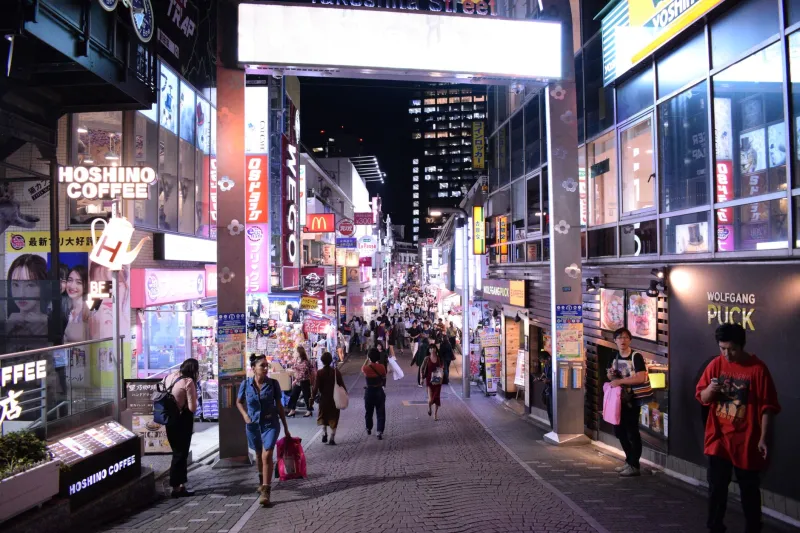
Walk through any American college campus right now and you'll spot it — the layered accessories, the deliberately clashing prints, the mix of childlike color palettes with sharp, architectural silhouettes. Maybe you've seen it on TikTok. Maybe your younger sibling is doing it. Whatever the entry point, what you're looking at is Japanese street fashion, thoroughly remixed and completely untethered from the gatekeepers who used to decide what "style" meant in America.
And Gen Z is absolutely running with it.
A Little Background on Where This Came From
Japanese street fashion didn't start as an export. It started as a rebellion. In the 1990s and early 2000s, Tokyo neighborhoods like Harajuku and Shimokitazawa became incubators for young people who were done with the conservative dress codes of Japanese corporate culture. What emerged was a constellation of distinct subcultures — each with its own rules, aesthetics, and community identity.
Decora is probably the most visually striking of these. Think hundreds of plastic hair clips, layers of brightly colored accessories, mismatched socks, and an overall aesthetic that looks like a craft store and a candy shop had a very enthusiastic child. It's deliberately maximalist, deliberately childlike, and — crucially — deliberately in-your-face.
Fairy kei and yume kawaii softer, dreamier cousins built around pastel palettes, vintage toy references, and a kind of intentional innocence. These styles influenced what Western audiences now broadly call "kawaii fashion," though that term has gotten so diluted in translation that it barely captures what the original subcultures were doing.
Then there's the avant-garde minimalism side of things — designers like Yohji Yamamoto and Rei Kawakubo of Comme des Garçons who built entire philosophies around asymmetry, deconstruction, and the deliberate rejection of conventional beauty. This branch has always had a foothold in Western fashion circles, but it's experiencing a new wave of appreciation among younger audiences who are tired of obvious luxury signaling.
Why TikTok Changed Everything
The thing about Japanese street fashion is that it was always visually extraordinary. What it lacked, for Western audiences, was accessibility — both physically (you had to know where to look) and culturally (the context wasn't always explained in ways that landed outside Japan).
TikTok fixed the first problem almost overnight. Suddenly, creators in Ohio and Texas were putting on decora outfits, explaining the aesthetic's history in 60-second clips, and tagging brands that shipped internationally. The algorithm did the rest. A girl in Osaka wearing a full fairy kei coordinate could end up on the For You page of a teenager in Atlanta, and that teenager could be wearing something similar within a week.
What's particularly interesting is how Gen Z adapted rather than simply copied. American takes on these aesthetics tend to be looser — more willing to blend decora maximalism with, say, a vintage band tee or a pair of Nike Dunks. Purists in the Japanese subculture communities have complicated feelings about this, but the hybrid versions are generating their own creative energy.
The Mainstream is Paying Attention
Retail moves slower than TikTok, but it does move. Hot Topic — which has always had an antenna for youth subculture — stocked decora-adjacent accessories aggressively through 2022 and 2023. ASOS launched dedicated kawaii fashion categories. Even Target has quietly incorporated pastel layering pieces and oversized accessories into its juniors section in ways that would have looked extremely niche five years ago.
More tellingly, fast fashion brands like Shein and Cider built entire lines around Y2K kawaii aesthetics — the sparkly, slightly chaotic visual language of early-2000s Japanese pop culture that shows up in the styling of artists like Namie Amuro and the early Harajuku girl moment that Gwen Stefani (controversially) brought to American pop consciousness.
The luxury tier is moving too. Brands like Simone Rocha and Molly Goddard, while not Japanese, have absorbed the maximalist accessory stacking and exaggerated silhouettes that Japanese street fashion pioneered. The line between "high fashion" and "Harajuku" has gotten genuinely blurry.
It's Not Just About Looking Different
Here's what gets missed in a lot of the coverage of this trend: Japanese street fashion isn't just an aesthetic. For the communities that built these styles, it was always about belonging — finding a group of people who rejected the same norms you rejected and building an identity around that shared refusal.
Gen Z gets this intuitively. These young Americans aren't just wearing decora clips because they look cool on camera (though they do). They're drawn to a fashion tradition that explicitly says you get to decide what you look like, that more is more if more is what you want, and that the rules of "appropriate" dressing are made up anyway.
In a moment when American fashion has been dominated by a kind of relentless minimalism — the "quiet luxury" of old money aesthetics, the normcore beige-everything look — Japanese street fashion offers a genuinely different proposition. It's loud. It's joyful. It's built for people who want to be seen.
The Respect Question
It's worth sitting with the tension here. Japanese subculture communities built these aesthetics over decades, often in direct response to pressures specific to Japanese society. When those aesthetics get flattened into a TikTok trend and sold at Forever 21, something gets lost.
The healthiest version of this cultural exchange involves American fans actually learning the history — understanding what decora was responding to, who the designers were, what the community norms meant. There are plenty of creators doing exactly that, building audiences by educating as much as they're styling.
Japanese street fashion has always been generous in that way. These subcultures were never really about exclusivity. They were about expression. If American teenagers are finding that same liberation in a pair of platform shoes and a hundred hair clips, that's not the worst possible outcome.
It just helps to know where the shoes came from.