Ancient Stages, Modern Stars: How Kabuki and Noh Built the Blueprint for Today's Entertainment
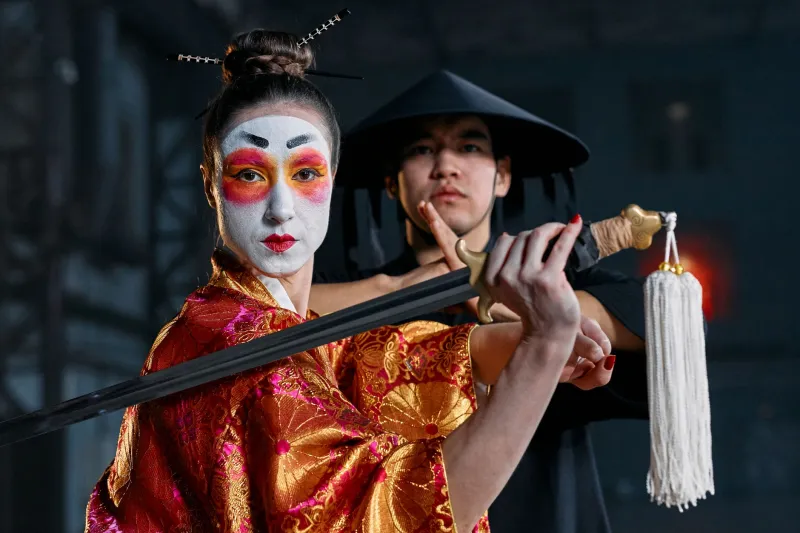
Somewhere right now, a teenager in Ohio is watching a dance performance on TikTok and hitting the share button. The choreography is sharp, deliberate, almost ritualistic — a performer moving through space with a kind of controlled intensity that feels different from a standard pop routine. They can't quite explain why it hits differently. They just know it does.
What they're probably not thinking about is a 400-year-old Japanese stage tradition. But they should be.
Japan's classical performance arts — Kabuki, Noh, and the more contemporary but still decades-old Butoh — didn't fade into museum pieces when the modern world arrived. They transformed, migrated, and embedded themselves into the DNA of global entertainment in ways that are still unfolding. If you want to understand why Japanese pop culture dominates so much of the world's entertainment landscape, you need to start several centuries before the first anime ever aired.
Kabuki: Drama as Visual Spectacle
Kabuki theater emerged in the early 17th century, and from its very beginning it was designed to be a lot. Elaborate costumes. Dramatic makeup (the kumadori face paint that turns performers into living symbols). Exaggerated gestures. Sudden, scene-stopping poses called mie, where an actor freezes in a moment of peak emotional intensity while the audience erupts in appreciation.
Kabuki was popular entertainment in the most literal sense — it was theater for the masses, not the aristocracy. It was loud, colorful, emotionally manipulative in the best possible way, and deeply invested in creating moments that audiences would remember and talk about afterward.
Sound familiar? It should. The mie pose — that freeze-frame moment of maximum dramatic impact — is arguably the ancestor of the anime "power pose," the idol group formation shot, and the superhero landing. When Goku powers up in Dragon Ball Z and the camera holds on his screaming face while lightning crackles around him, that's not just anime convention. That's Kabuki logic applied to animation: stop time, let the audience feel the weight of the moment, then release.
Kabuki's influence on anime aesthetics is direct enough that scholars have written extensively about it. The exaggerated expressions, the symbolic use of color in character design, the theatrical entrances of major characters — all of it traces a line back to those early 17th-century stages in Edo.
Noh: The Art of Restraint
If Kabuki is all intensity and spectacle, Noh is its philosophical opposite — and equally influential.
Noh theater, which predates Kabuki by about two centuries, operates on the principle that less is more. Performers move slowly, deliberately, with minimal expression. Masks replace facial emotion, forcing the audience to project feeling onto a neutral surface. The plays themselves often deal with ghosts, grief, and the lingering weight of the unresolved past.
Noh is the theatrical embodiment of ma — that concept of meaningful emptiness we talked about in the context of Studio Ghibli. A Noh performance can feel almost unbearably slow to a first-time Western viewer. But that slowness is the point. It creates a meditative space where emotion accumulates rather than being delivered.
You can hear Noh in the soundscapes of contemporary Japanese video games — the sparse, haunting scores of Shadow of the Colossus or Ico (both made by Japanese studios) owe an enormous debt to Noh's aesthetic of restrained, accumulating tension. You can see it in the movement vocabulary of certain anime sequences, particularly in more artistic series like Mononoke (the horror anthology, not the Ghibli film) or Mushishi, where stillness carries as much weight as action.
And you can see it — perhaps most surprisingly — in the performance philosophy of certain idol groups and solo artists who train in controlled, precise movement that prioritizes symbolic gesture over energetic release.
Butoh: The Rebel Tradition That Went Global
Butoh is the youngest of Japan's major theatrical traditions, emerging in the late 1950s as a deliberate rejection of both Western dance forms and the perceived refinement of classical Japanese performance. It's raw, often disturbing, and deeply physical — performers contort their bodies, move with agonizing slowness, and frequently engage with themes of death, transformation, and the grotesque.
It's also become one of the most internationally influential avant-garde art forms of the 20th century.
Butoh's DNA shows up in unexpected places. The movement style of certain visual kei rock performers — that theatrical, gender-fluid, physically extreme stage presence — draws directly from Butoh's aesthetic. Choreographers working with artists like Björk and Lady Gaga have cited Butoh as a major influence. And in anime, the body horror sequences of series like Parasyte or Devilman Crybaby carry Butoh's fingerprints in their visual language of transformation and physical extremity.
The Idol Stage as Ritual Theater
Here's where things get really interesting for contemporary pop culture watchers.
Japanese idol culture — the elaborate, highly structured world of performer groups like AKB48, Johnny's Entertainment acts, and the countless indie idol units performing in small venues across Japan — borrows heavily from theatrical tradition even when its practitioners don't realize it.
The formations, the synchronized movement, the costumes as character signifiers, the audience call-and-response rituals — all of it echoes the structured, participatory nature of traditional Japanese performance. Kabuki audiences didn't just watch; they shouted out appreciation at key moments, creating a collective experience. Contemporary idol concerts operate on remarkably similar principles, with fan chants, light stick coordination, and call-and-response sections that turn the audience into performers themselves.
This tradition has migrated into K-pop — which was heavily shaped by Japanese idol culture in its early development — and from there into the global pop landscape. When a BTS performance stops you in your tracks with its precision and theatrical scale, you're watching something that has Kabuki's DNA several generations removed.
The Thread That Connects Everything
What all of these traditions share — Kabuki, Noh, Butoh, and the idol stage — is a deep commitment to performance as something more than entertainment. It's ritual. It's transformation. It's a structured encounter between performer and audience that creates meaning through deliberate craft.
Japan's cultural heritage didn't get left behind when the entertainment industry modernized. It got absorbed, remixed, and redeployed across every medium that came along. That's not preservation — that's evolution. And it's why, when something from Japanese entertainment culture catches the world's attention, it often carries a resonance that's hard to explain but impossible to ignore.
The kid in Ohio hitting share on that TikTok video? They're participating in a tradition older than the United States. They just don't know it yet.