Before They're Gone: The Real Tokyo Neighborhoods That Built Your Favorite Stories
If you've ever done an anime pilgrimage — stood on the stairs from Your Name, walked the Shibuya crossing from Paprika, found the park bench from 5 Centimeters Per Second — you already understand something important: these stories aren't just set in Japan. They're set in specific places, and those places matter.
But Tokyo doesn't stand still. And some of those places are disappearing.
The City That Keeps Rewriting Itself
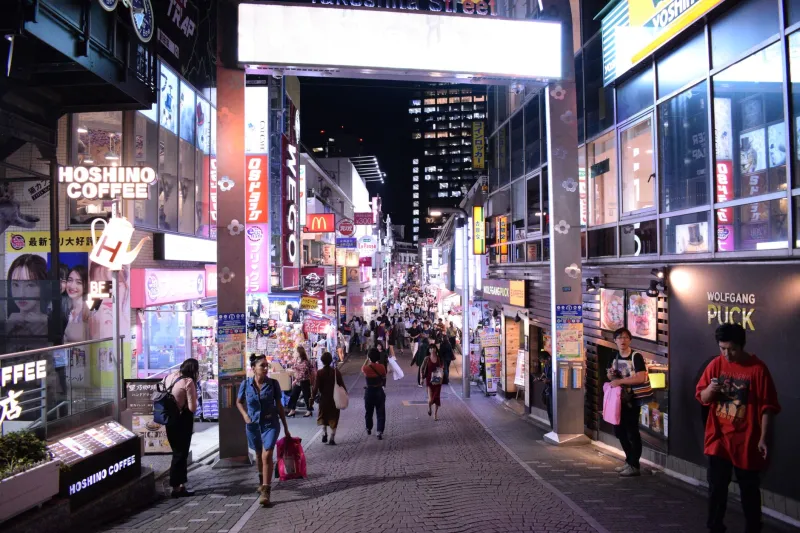
Tokyo has always been a city in motion. Major portions were destroyed in the 1923 Great Kanto Earthquake and rebuilt. World War II firebombing leveled huge swaths of the city. The postwar economic boom built and rebuilt again. The 1964 Olympics triggered another wave of modernization. The 2021 Olympics another.
Each cycle of destruction and construction has been, in some sense, the story of Tokyo — a city that holds its history not in preserved architecture but in memory, in street patterns, in the occasional surviving shotengai shopping arcade that somehow escaped the wrecking ball.
But the current wave of gentrification and urban redevelopment feels different to the people documenting it. It's faster, more comprehensive, and it's targeting the specific kinds of spaces — narrow alleys, dense low-rise neighborhoods, old entertainment districts — that have historically fed the imagination of Japan's creative industries.
Golden Gai and the Bars That Built Noir
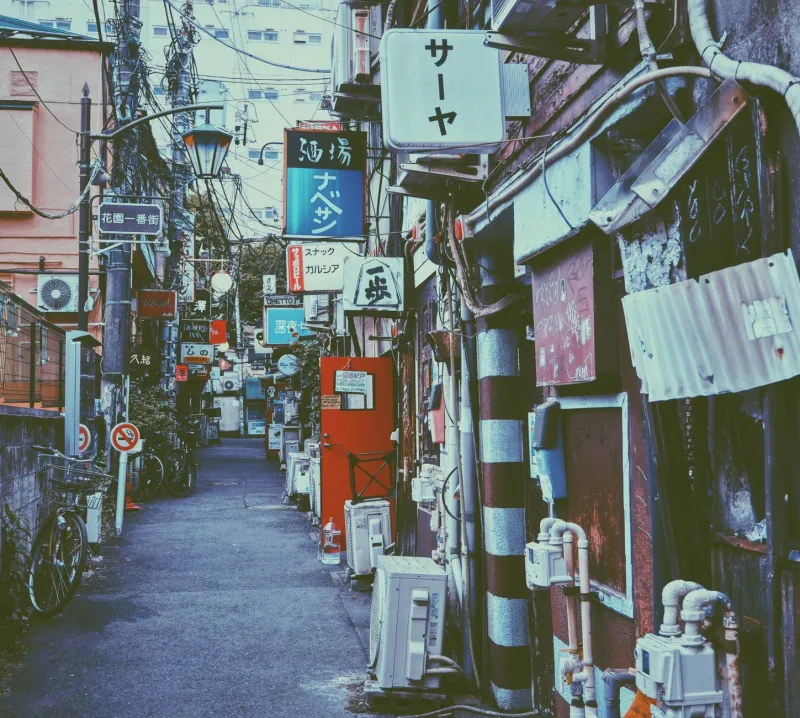
Shinjuku's Golden Gai is one of the most famous examples of a Tokyo neighborhood that has survived against all odds — and is still under constant threat.
A dense cluster of about 200 tiny bars packed into a maze of alleys just east of Kabukicho, Golden Gai dates to the postwar black market era. The bars are barely bigger than walk-in closets. Some seat six people. The whole district covers maybe two city blocks.
For decades, Golden Gai was a gathering place for writers, filmmakers, directors, and manga artists. Seiichi Hayashi, whose work influenced generations of manga creators, was a regular. The area's claustrophobic, intimate atmosphere — strangers pressed together by necessity, conversations forced by proximity — showed up in countless works of Japanese noir fiction and manga.
The district has survived multiple redevelopment attempts since the 1980s, partly because of tenant resistance and partly because of its tourism value. But "survived" is doing a lot of work in that sentence. The bars that remain are increasingly tourist-facing rather than the artist-and-writer haunts they once were. The creative community that made Golden Gai worth preserving has largely moved on or aged out. The physical space persists; the culture it contained is mostly gone.
That gap — between a preserved landmark and a living place — is one of the central tensions in the conversation about Tokyo's disappearing creative geography.
Your Name and the Neighborhoods That Moved People
Makoto Shinkai's Your Name is one of the highest-grossing anime films ever made, and a significant part of its emotional power comes from how precisely it renders Tokyo. The film's Tokyo sequences aren't generic cityscapes. They're specific neighborhoods — Shinjuku, Yotsuya, Suga Shrine — rendered with a documentary fidelity that made the film feel grounded even as its story reached for the fantastical.
The Suga Shrine stairs became an immediate pilgrimage destination after the film's 2016 release. Fans flew in from across Asia and North America to stand where Taki stood, to look out at the same view of Shinjuku's towers. The shrine saw visitor numbers it had never experienced in its centuries of existence.
But here's the thing about that view: it's already changing. The buildings in Shinkai's backgrounds are real buildings that get renovated, demolished, and replaced. The specific visual texture of the city that made the film feel true — the particular density of a certain block, the color of a certain building's facade — has a shelf life.
Shinkai himself has spoken about this. His films are, in part, acts of preservation — capturing cities at specific moments before they change. 5 Centimeters Per Second (2007) and The Garden of Words (2013) both function this way, as precise records of Tokyo spaces that were already beginning to shift when he filmed them.
JoJo's Real Sendai
Hirohiko Araki's JoJo's Bizarre Adventure has a complicated relationship with real geography. The series is famous for its international settings, but Araki has spoken extensively about how his hometown of Sendai — and by extension, his early experiences of urban Japan — shaped his visual imagination.
More directly, fans of the series have documented specific locations in various Japanese cities that appeared as reference material in the manga's backgrounds. Old commercial districts, specific types of postwar architecture, the particular visual language of Japanese urban commercial strips from the 1970s and 80s.
Many of those reference locations are gone. The kind of mixed-use, slightly chaotic urban commercial strip that Araki's early work depicts — small manufacturers next to noodle shops next to pachinko parlors — has been systematically replaced across Japanese cities by the kind of standardized retail and residential development that looks the same everywhere.
The architectural specificity that made those manga panels feel located somewhere real rather than generically Japanese is disappearing, and with it, a visual vocabulary that shaped how an entire generation of creators saw urban space.
Who's Documenting What's Left
A loose network of photographers, fans, and urban historians are racing to document what remains.
The Anime Architecture book project, which accompanied an exhibition of the same name, brought together production design documents from major studios to show how real locations were translated into animated backgrounds. It's an act of archival preservation as much as art history.
Online communities — on Twitter/X, YouTube, and dedicated wikis — have developed sophisticated methodologies for identifying real-world locations in anime and manga, then visiting and photographing them before redevelopment arrives. Some of these projects are explicitly preservation-focused; others are pilgrimages that become inadvertent documentation.
The Tokyo Metropolitan Government has, in recent years, recognized the cultural tourism value of anime and manga location tourism. Whether that recognition translates into actual preservation pressure on developers is a different question.
What Gets Lost When the Buildings Go
There's an argument that cities should change, that nostalgia for a specific urban texture is really just nostalgia for the social conditions that created it, and that those conditions weren't always good for the people who lived in them.
That argument has merit. The dense, slightly chaotic neighborhoods that look so romantic in anime backgrounds were often also poorly ventilated, earthquake-vulnerable, and economically marginal. Preservation isn't always liberation.
But creative geography matters. The specific texture of the places where artists work and live shows up in their work, and when those places disappear, something in the visual and emotional vocabulary of the art that came from them disappears too.
When American fans make pilgrimages to Tokyo looking for the city they fell in love with through anime and manga, they're not just tourists. They're readers looking for the original text. And some of those pages are already gone.
The ones that remain are worth finding while you still can.